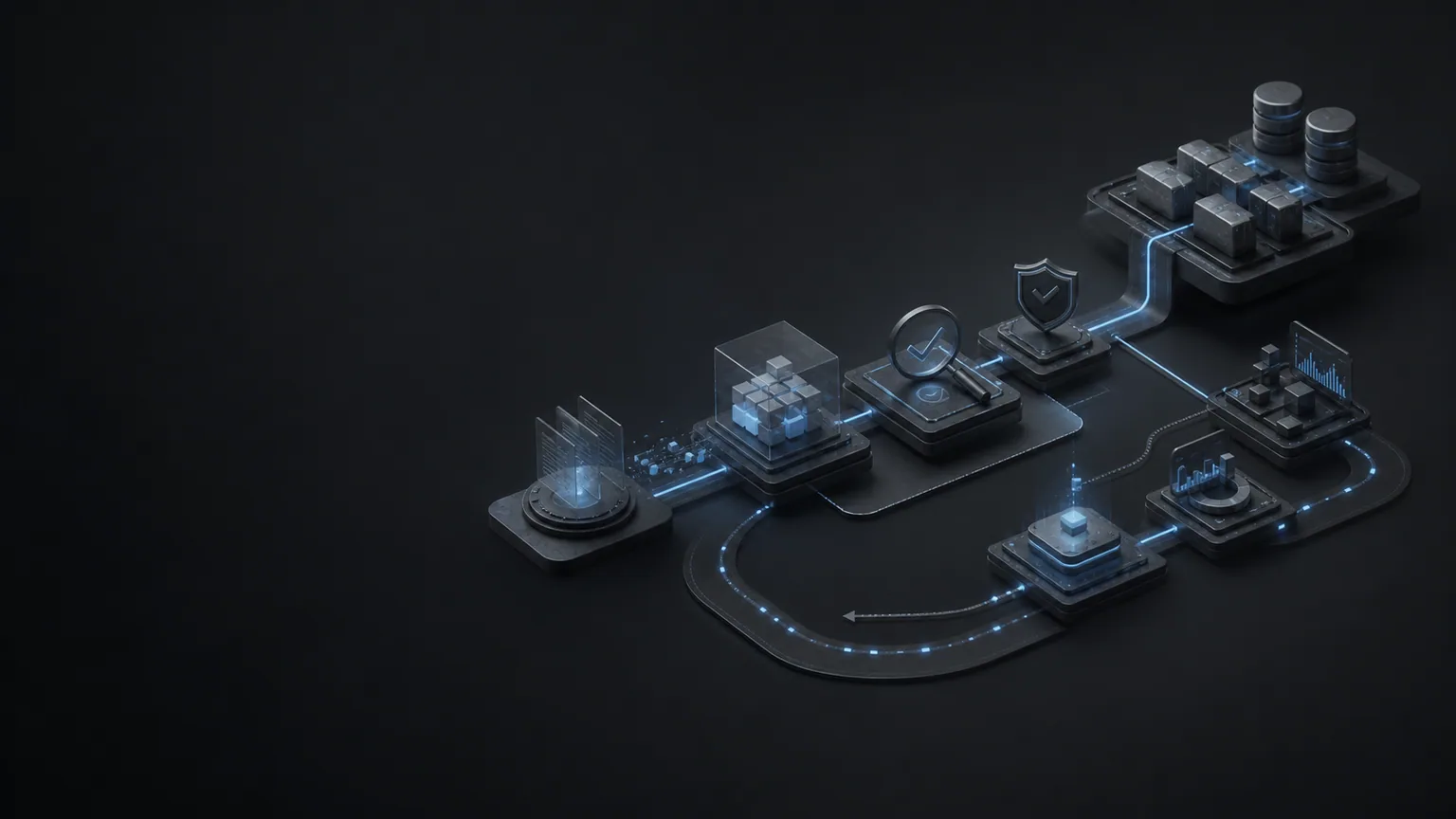
Concept illustration: DevOps platform engineering workflow with build, test, policy, deployment, observability, and recovery stages

Cloud & platforms · India and global delivery

DevOps, Platform Engineering & SRE

Delivery platforms, CI/CD, infrastructure automation, observability, and reliability practices that help product teams ship safely.

Service overview

A foundation designed around the operating reality

Platform engineering creates reusable capabilities for internal users; DevOps and SRE practices make delivery and reliability shared, measurable responsibilities. We build the smallest useful platform around developer and operational needs—not a tool collection looking for adoption.

What we build

Capability with an operating model

The deliverable includes decisions, system boundaries, quality controls, documentation, and ownership—not only implementation.

01

Continuous delivery

Create reviewable build, test, security, release, migration, rollback, and environment-promotion workflows.

02

Infrastructure and platform capabilities

Automate repeatable environments, secrets, artifacts, service templates, policies, and self-service paths.

03

Observability and reliability

Define service indicators, logs, metrics, traces, alerts, dashboards, incident context, and actionable ownership.

04

Developer experience

Reduce cognitive load with clear golden paths, documentation, local workflows, feedback speed, and measured adoption.

End-to-end engagement

From discovery through improvement

Deepak remains connected to business direction, architecture, implementation quality, and stakeholder decisions through the engagement.

  1. 01

    Discover

    Align buyers, users, business outcomes, constraints, current systems, evidence, risks, and the smallest useful scope.

  2. 02

    Architect

    Make boundaries, data, integrations, security, quality attributes, operating ownership, and trade-offs explicit.

  3. 03

    Deliver

    Build in reviewable increments with tests, demonstrations, documentation, acceptance criteria, and stakeholder visibility.

  4. 04

    Operate and improve

    Deploy, observe, support, learn from real use, and prioritize the next improvement using evidence.

Buyer paths

Different constraints. One accountable foundation.

The scope changes by maturity and risk while the engineering standard remains explicit.

Funded product teams

Introduce dependable releases and observability before growth turns manual operations into product risk.

Growing businesses

Standardize environments, deployments, backups, monitoring, and incident response across a small team.

Enterprise teams

Create governed internal platform capabilities that improve delivery without removing team autonomy.

Relevant experience

Anonymized delivery context

Relevant delivery includes container platforms, CI/CD, multi-service environments, AWS operations, deployment automation, observability, backup workflows, code-quality practices, and team enablement.

Typical engagement targets

Measures agreed before claims

These are planning targets, not guaranteed or fabricated client results. Baselines and acceptance criteria are confirmed during discovery.

  • Reduce manual release steps and environment drift
  • Shorten feedback and recovery time for priority services
  • Increase adoption of documented, secure delivery paths

Technology foundation

Tools selected after the constraints

  • Docker
  • GitHub Actions
  • ECS
  • Kubernetes
  • Terraform
  • OpenTelemetry
  • Prometheus
  • Grafana
  • SRE
  • Platform engineering

Questions

Before an engagement starts

Clear constraints produce a better technical decision and a more useful first scope.

Do we need Kubernetes for platform engineering?

No. Platform engineering is about useful internal capabilities. The implementation may use ECS, virtual machines, managed services, Kubernetes, or a simpler combination.

How do you measure platform value?

Measures are tied to user outcomes: deployment lead time, failure and recovery behavior, feedback speed, reliability, adoption, support load, and developer experience.

Connected capabilities

Most production outcomes cross product, backend, cloud, data, and operational boundaries.